Antique Rug Cleaning, Done Conservatively
An old rug's weak point is the foundation threads inside, not the pile you see, and everything about our approach is built around not testing their strength.
What rough handling does to an old rug
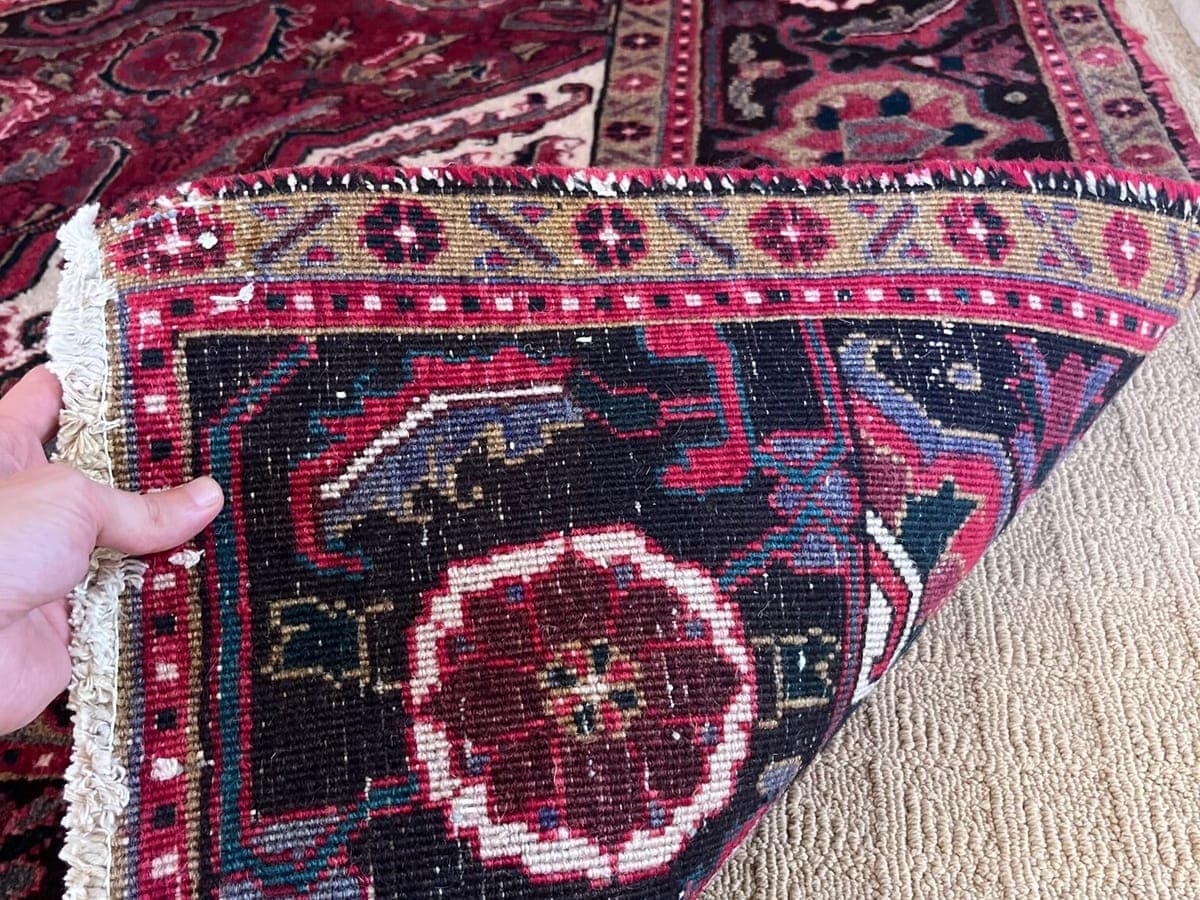
The plant process that a sturdy twenty-year-old rug tolerates is a gauntlet for a ninety-year-old one. Rolling and trucking flexes brittle threads. Immersion adds the weight of gallons of water to a structure already at its limits, and hanging a soaked antique to dry loads every weakened warp thread with that weight at once. Rugs survive this routinely. Some don't, and there's no way to know which category yours is in from the outside.
Home attempts fail at smaller scale but in the same direction. Scrubbing flexes and abrades exactly the threads that have the least strength left to give, and a stiff brush can open a worn area faster than decades of footsteps did. On an antique, enthusiasm is the most dangerous cleaning product there is.
Aged foundations: the strength you can't see
Time changes rug foundations in a way it doesn't change the pile. The cotton warp and weft inside an antique have spent decades oxidizing, drying, and fatiguing, and they lose tensile strength continuously while looking exactly the same. A rug with a glowing, healthy face can be one flex away from a foundation crack, which is why age, not appearance, sets the handling rules.
Dry rot is the advanced case. Foundation cotton that spent time damp, from a plant pot, a basement, or a long-ago flood, decays into something with the strength of paper. A rug with dry rot crackles faintly when flexed, and pile can detach in strips under stress that a sound rug wouldn't notice. Rot announces itself only when it's already done.
The other thing decades deposit is soil, and this is the part that cuts in your favor. An antique rug has usually accumulated more embedded grit than any owner suspects, dulling the colors and grinding at the pile base. Under that gray film, the original dyes are frequently still saturated and vivid. The dirt is reversible in a way the structural aging isn't, which is exactly why cleaning an antique is worth doing and worth doing gently.
So 'conservative' has a concrete meaning here. It means dry soil removal does as much of the work as possible, moisture is used at the minimum the rug's condition allows, nothing flexes, nothing hangs, nothing tumbles, and the rug never bears the weight of its own wash water. It also means stopping when the rug says stop.
Assess, agree, then the gentlest pass we have
The job starts with a condition review, together, at the rug. We go over wear, past repairs, weak spots, fringe condition, and any signs of rot, and we agree on what the cleaning is meant to accomplish before anything begins. If we find dry rot or a foundation too fragile to clean safely, we say so and stop there. Walking away from a job beats damaging an irreplaceable rug on any scorecard we care about.
The cleaning itself is our lightest protocol: careful dry soil removal from both faces, dye testing on every color, then the carbonated low-moisture pass at minimal strength, with the rug lying flat and supported on your floor start to finish. No rolling, no transit, no hanging, dry in about an hour, and you're present for every minute.
About what cleaning can't do, plainly: moth holes, worn-through areas, frayed fringe, old repairs, dye bleed, and sun fading all remain after cleaning. Those are restoration matters, reweaving and repair are a different trade, and we don't offer them. What you get from us is the rug you already have, minus decades of gray grit, with its colors readable again.
We walk through the full low-moisture process on our how rug and upholstery cleaning works page, and every job is backed by our 100% satisfaction guarantee.
Frequently asked questions
Shouldn't an antique go to a specialist?
For structural work, yes, a restorer is the right call and we'll tell you if your rug needs one. For cleaning, minimal handling is the specialist move: every mile of transport and every turn of a roller is a stress event for an aged foundation. Cleaning it flat, in place, with you watching, removes most of the risk that has nothing to do with the cleaning itself.
Is cleaning risky for the rug's value?
Leaving it dirty is the riskier position. Embedded grit is sharp, it cuts at the foundation with every footstep, and it feeds moth activity, which prefers soiled wool. A gentle professional cleaning is standard care for collectible rugs. What genuinely harms value is aggressive washing, so the method matters more than the decision.
What happens if you find dry rot partway through your inspection?
We stop and show you exactly what we found, and if it makes cleaning unsafe, we don't clean. You'll never get a version of us pressing on because the truck already came out. There's no charge for finding out your rug needs a restorer before it needs us.
Can you fix the moth holes and worn fringe while you're at it?
No. Repair, reweaving, and fringe replacement are weaver's work and we don't do them, or quietly subcontract them, or bill as if we did. We clean the rug, tell you honestly what condition it's in, and can point you toward the kind of specialist the repairs need.
Related rug & upholstery problems we solve
Persian rugs
Wool pile over a cotton foundation, cleaned without ever wetting the skeleton that holds it together.
RugTypeOriental rugs
Hand-knotted density and pH-sensitive dyes, handled with a test-first discipline on your own floor.
RugTypeSilk rugs
A fiber whose shine is pure optics, cleaned with the least moisture and the lightest touch we use on anything.
Sit back down on clean
Enter your zip code to reach your local Safe-Dry® team. We clean rugs and upholstery in-home across 532 locations in 6 states, with same-day appointments in most areas.