How We Clean Microfiber Couches
Microfiber loves oil and hates water. That single fact explains the dark arms, the water rings, and why cleaning it wrong makes it worse.
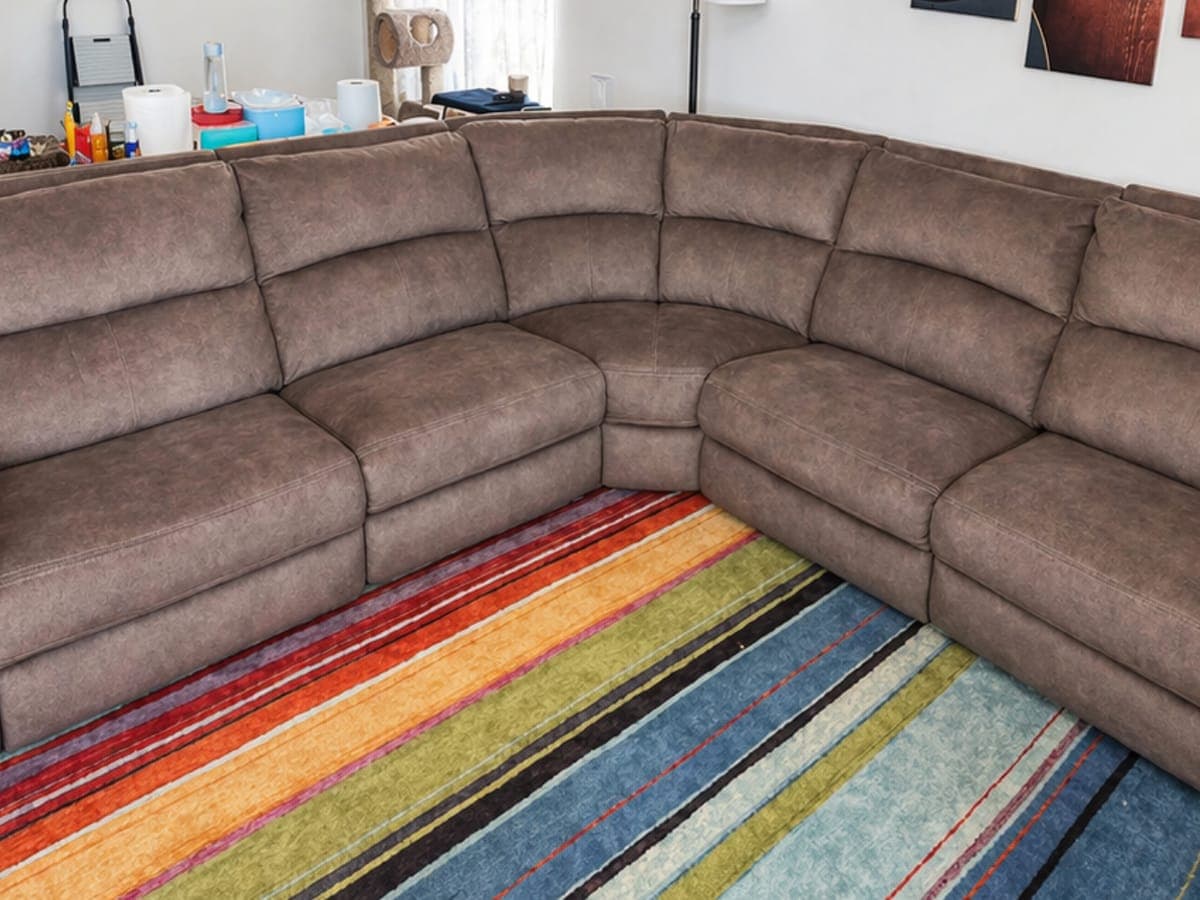
Microfiber is the most-searched upholstery fabric there is, and the searches are full of frustration: water stains from cleaning attempts, shiny flattened patches, arms gone dark. All of it traces back to one chemical fact about the fiber, and once you know it, everything microfiber does starts making sense.
The three ways microfiber punishes DIY
The signature microfiber disaster is the water ring. Somebody dabs a spot with a damp cloth, the spot dries, and now there's a brown-edged ring bigger and more obvious than whatever was there before. It happens with plain water, which is the part that shocks people. So they try again with more water, and get a bigger ring.
The internet's answer is rubbing alcohol, and it's half right. Alcohol evaporates too fast to ring, so on a small fresh spot it can genuinely work. On a large area it's a different story: it can pull color, it flattens the nap where you scrub, and working over a whole seat cushion with alcohol in a closed room is unpleasant for reasons your nose will explain. A trick that works on a coin-sized spot does not scale to a couch.
Scrubbing is the third trap, and it's the one that causes permanent-looking damage. Microfiber's velvety feel comes from a raised nap of extremely fine fibers. Attack a spot with a stiff brush or heavy pressure and those fibers crush flat and stay flat. The crushed patch reflects light differently, reading as a shiny or dark stain that no amount of further cleaning changes, because the mark is crushed texture, not soil.
And underneath all three failures sits the reason people were cleaning in the first place: the fabric had gone grey and the arms had gone dark. Store-bought upholstery foams don't fix that either. They leave detergent residue in a fabric that's already an oil magnet, and the greying accelerates.
Microfiber doesn't water-ring in spite of being cleaned. It rings because of it: water crawls to an edge, evaporates, and drops everything it carried in a line.
A fiber finer than silk, made of plastic
Microfiber is polyester spun into strands finer than silk, then split finer still. That gives a square inch of the fabric an enormous amount of fiber surface area, which is what makes it soft, durable, and great at hiding wear. It's also what makes it a chemistry problem, because all that surface area belongs to polyester, and polyester is oleophilic: it attracts and binds oil while actively repelling water.
Follow that one property around and you can explain the whole fabric. Body oil from skin, hair, and hands bonds to the fiber on contact and holds, which is why arms, headrest zones, and seat centers go dark first and why plain water does nothing about them. Water, meanwhile, won't penetrate the fiber, so it sits in the fabric's pores, crawls outward along the surface, and evaporates at its edge. Everything the water managed to dissolve or loosen gets carried to that edge and deposited in a line. That line is the ring.
The nap adds the optical layer. Those ultra-fine fibers stand up like pile on velvet, and the direction they lie changes how light bounces. A hand dragged across a clean microfiber couch leaves a visible trail for the same reason. Crushed nap from scrubbing, or nap that dried matted after a wetting, shows as a stain that isn't there. Half of what people call stains on microfiber is fiber lying in the wrong direction.
No evaporation edge, no ring
The ring problem disappears when there's no evaporation edge, and that's the core of our approach. The carbonated solution goes on in a controlled low-moisture film across the full panel, never a wet island in the middle of a dry cushion, and the extraction pass recovers it before evaporation gets a vote. Soil leaves with the moisture instead of migrating to a drying line. The solution itself is soap free, which matters doubly on this fabric: there's no detergent residue left behind for the oil-hungry polyester to glue the next month of dust onto.
Lifting the bonded body oil is what the carbonation is for, floating it up off all that fiber surface area so it can be extracted. Then comes the step specific to this fabric: grooming. We brush the nap back to standing while it dries so it dries upright and uniform, which is what makes a finished microfiber couch look restored instead of merely clean. Crushed spots from old scrubbing usually revive with grooming. Fibers that were truly broken by hard abrasion are the honest exception, and we'll point out any patch we think is past recovery before we start. Dry time runs one to two hours, same day.
We walk through the full low-moisture process on our how rug and upholstery cleaning works page, and every job is backed by our 100% satisfaction guarantee.
Want to try it yourself first?
Light, everyday soiling is worth a shot at home. Here is the honest version of what actually helps, and the point where DIY hits its ceiling.
- 1
Vacuum the whole piece first
Upholstery tool, slow passes, seams included. Dry soil sitting in the nap becomes mud the moment anything damp touches it, so this step decides how the rest goes.
- 2
Read the tag before anything gets wet
Microfiber tags vary: W means water is safe, S means solvent only, and a lot of microfiber is S. If yours is S, plain water is off the table entirely and the alcohol method below is your only home option.
- 3
For a small fresh spot, alcohol on a white cloth
Test a hidden area first and wait for it to dry. Then lightly dampen a white cloth with rubbing alcohol and blot the spot. Alcohol flashes off too fast to form a ring. Keep it to spots smaller than a coaster.
- 4
Brush the nap when fully dry
A soft-bristled brush, light pressure, all one direction. This restands the fibers so the cleaned spot matches its surroundings. Skipping this step is why home-cleaned spots stay visible even when the soil is gone.
- 5
Stop before you make rings
Multiple spots, overall greying, dark arms, or any spot bigger than your palm are past the safe zone. Large-area DIY on microfiber is a ring factory, and each failed attempt sets soil deeper. That's the point where a professional pass costs less than the damage.
Frequently asked questions
Why did plain water stain my microfiber couch?
Because polyester repels water. Instead of soaking in, the water spread sideways through the fabric, dissolved a little of the soil in its path, and carried it to the edge where it evaporated. The deposit at that edge is the ring. It's the fabric working as designed, which is why the fix is moisture control and immediate extraction, not more water.
Can you fix the shiny flattened patches?
Usually. Most shiny patches are crushed nap, fibers bent flat by scrubbing, and they respond to cleaning followed by grooming the nap back upright as it dries. The exception is fiber that was genuinely broken off by hard abrasion, which no process restores. We'll tell you which kind you're looking at during the walkthrough.
The arms are much darker than everything else. Is that permanent?
Almost never. Dark arms are bonded body oil, the thing polyester attracts most, plus the dust it glued down. That's exactly the deposit the carbonated process is designed to float off the fiber. Arms typically show the most dramatic before-and-after on the whole piece.
What does microfiber couch cleaning cost, and how often is it needed?
Firm price at the walkthrough once the technician sees the piece and its condition, with $25 off through the site. On frequency, microfiber's oil affinity means it greys a bit faster than tighter fabrics: every 12 to 18 months generally, annual in a house with pets, kids, or allergy sufferers.
Related rug & upholstery problems we solve
Couches & sofas
The head service. Sofas cleaned in your living room, one cushion at a time, dry the same afternoon.
UpholsteryCareStain removal
Tannins, oils, proteins, and dyes each release differently. Matched chemistry, controlled moisture, honest odds.
UpholsteryCareClean or replace?
Press test, towel test, smell test. Ten minutes that decide whether the couch needs us or the curb.
Sit back down on clean
Enter your zip code to reach your local Safe-Dry® team. We clean rugs and upholstery in-home across 532 locations in 6 states, with same-day appointments in most areas.