Couch and Sofa Cleaning, Done in Your Living Room
The couch never leaves the house. We clean it where it sits, one cushion at a time, and it dries in one to two hours.
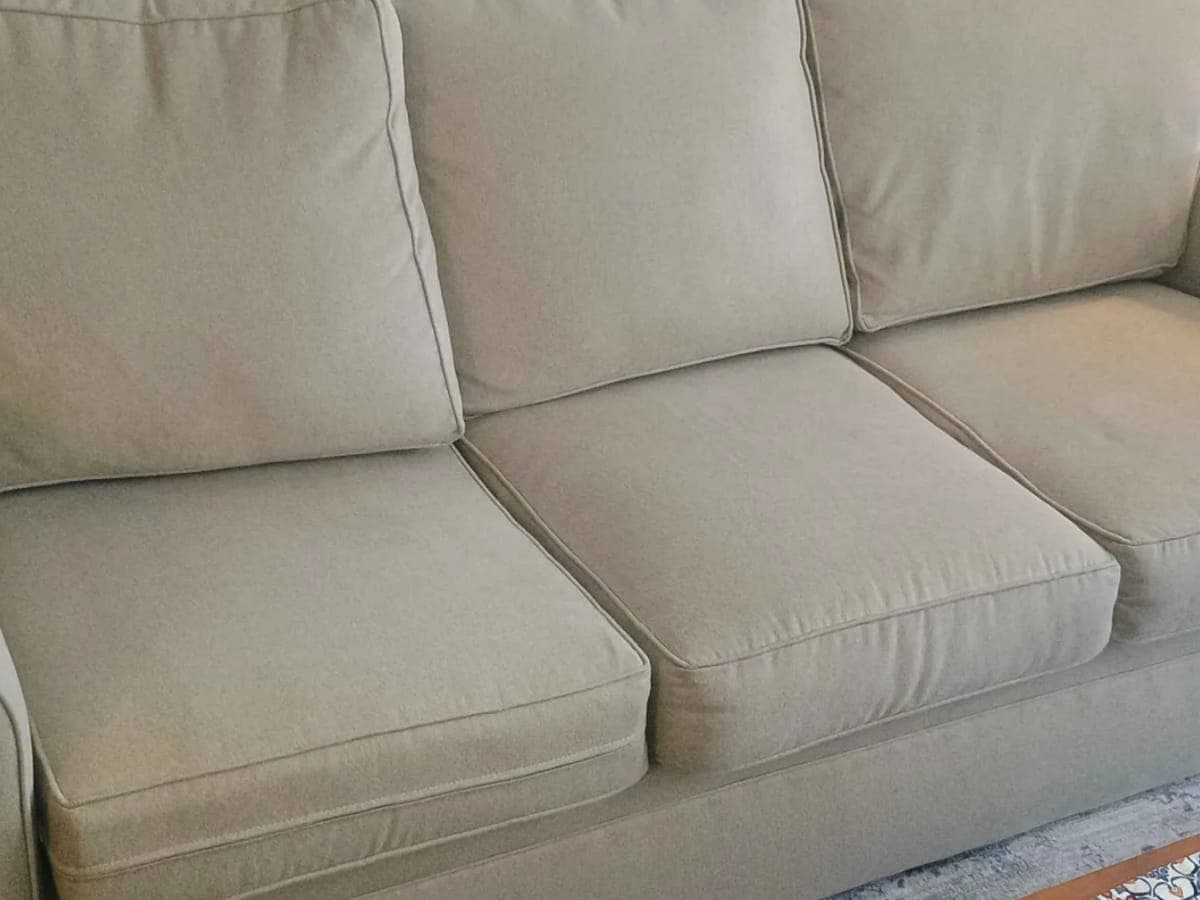
Professional couch cleaning is one of those services people put off for years because they assume it means a truck, a hose through the front door, and a sofa that squishes for a week. Ours means a technician kneeling at your couch for a couple of hours while it stays exactly where it is. The fabric comes back several shades closer to what you bought, and you can sit on it that evening.
The rental machine problem
The grocery-store rental extractor is the classic mistake here, and the reason it fails explains half of this page. Those machines were built for carpet, which has a pad underneath to buy time and airflow above to dry it. A couch cushion is a block of open-cell foam wrapped in fabric. Push hot soapy water into it with a rental wand and the foam accepts every ounce, then holds it. Three days later the cushion still feels cool in the middle and the living room has a smell it didn't have before. That smell is the foam souring.
The soap itself is the second half of the problem. Rental detergents and most spray-on foam cleaners leave a residue in the fabric that stays slightly tacky forever. The couch looks better for two or three weeks, then turns gray faster than it ever did before, because the residue is now grabbing every particle of dust that lands on it.
And scrubbing, the instinct everyone defaults to, mostly relocates soil. Rubbing a soiled seat cushion with a brush or a towel pushes the oily fraction deeper into the yarn and frays the fiber surface while it's at it. The spot gets bigger and fuzzier at the same time.
The soil map on a couch matches the seating chart. The seat everyone fights over is always the darkest, and that darkness is deposit, not wear.
Your couch is a filter you sit on
A couch spends its whole life doing two jobs. The obvious one is holding people. The invisible one is filtering the room's air. Every time the HVAC cycles, air moves through the room, and the biggest soft porous object in that room strains dust, pollen, cooking residue, and pet dander out of it. Sit down and the cushion exhales. Stand up and it inhales. Years of that breathing loads the fabric with fine soil no vacuum fully reaches.
Then there's what people add directly. Skin sheds oil constantly, and the sitting zones collect it: the middle of each seat cushion, the front edge where calves rest, the spot on the back cushion where a head lands during movie night. Body oil is sticky, so those zones bond with the airborne dust the couch was already filtering. Oil plus dust is the gray dinge that makes a five-year-old couch look ten.
The pattern gives it away. Look at your own couch and you'll see the soil map matches the seating chart. The end seat by the lamp is darker than the middle nobody chooses. The armrest where the phone-scrolling hand rests has a shadow. All of it is deposit, and deposit is removable.
Cushion by cushion, without the soak
We clean the couch in the room it lives in. Each cushion comes off and gets worked individually, both faces, then the deck, arms, back, and skirt. The cleaning solution is a low-moisture carbonated one, all natural and soap free. The carbonation does the lifting, floating embedded soil up out of the fiber to the surface, and the extraction pass then removes that soil along with the moisture that carried it. Nothing gets pushed down into the foam because nothing is applied in the volume it would take to get there.
Because so little moisture goes in, the couch is dry to the touch in one to two hours. Same day, same evening, sit where you like. On fabrics that look delicate we test a hidden area first, and if a couch has pet odor riding along we treat it with an enzyme product that breaks the odor source down instead of perfuming over it.
We walk through the full low-moisture process on our how rug and upholstery cleaning works page, and every job is backed by our 100% satisfaction guarantee.
Want to try it yourself first?
Light, everyday soiling is worth a shot at home. Here is the honest version of what actually helps, and the point where DIY hits its ceiling.
- 1
Vacuum like you mean it
Upholstery tool on the flats, crevice tool in the seams and under the cushions. A slow, overlapping pass removes the dry soil layer, and every bit you pull out now is grit that won't get ground in later. This one step, done monthly, meaningfully slows how fast a couch goes gray.
- 2
Find the tag and read the code
Under a cushion or on the frame there's a care tag with a letter. W means water-based cleaning is safe, S means solvent only, WS either, X vacuum only. If your tag says S or X, stop here. Water on those fabrics causes rings and texture change you can't undo.
- 3
Spot-clean small and blot, never rub
On a W fabric, a little cool water on a white cloth, pressed onto a fresh spot and lifted, will handle a lot. Work from the outside of the spot inward. The moment you catch yourself scrubbing, stop, because rubbing spreads the oily part and roughs up the fiber.
- 4
Know when you're past DIY
Overall dinge, a smell you notice when you sit down, or any spot that survived your first gentle attempt are all past the home-remedy line. A second, more aggressive attempt is usually what sets a stain permanently, so that's the point to bring us in.
Frequently asked questions
Do you take the couch away to clean it?
No. Everything happens in your home, in the room where the couch sits. There's no pickup, no shop, and no days of waiting. A technician cleans it in place, cushion by cushion, and it's dry within one to two hours of finishing.
Can we sit on it the same day?
Yes. The process uses a low-moisture carbonated solution and the extraction pass removes most of what goes on, so fabric is typically dry to the touch in one to two hours. An evening on your own couch is the normal outcome of a morning appointment.
How much does couch cleaning cost?
Your technician looks at the piece, the fabric, and the condition at the walkthrough and quotes a firm price before any work starts. Mention the website and you get $25 off. We don't quote numbers sight unseen because a lightly used loveseat and a decade of family room duty are not the same job.
How often should a couch be professionally cleaned?
Every 12 to 18 months for a typical household. Go annual if pets share the couch, kids eat on it, or anyone in the house has allergies, because the dander and dust load builds faster than the visible soil does.
Related rug & upholstery problems we solve
Sectionals
Every module cleaned in place in one visit, so the chaise finally matches the wing nobody sits on.
UpholsteryCareClean or replace?
Press test, towel test, smell test. Ten minutes that decide whether the couch needs us or the curb.
UpholsteryCareStain removal
Tannins, oils, proteins, and dyes each release differently. Matched chemistry, controlled moisture, honest odds.
Sit back down on clean
Enter your zip code to reach your local Safe-Dry® team. We clean rugs and upholstery in-home across 532 locations in 6 states, with same-day appointments in most areas.