Persian Rug Cleaning Without the Bath
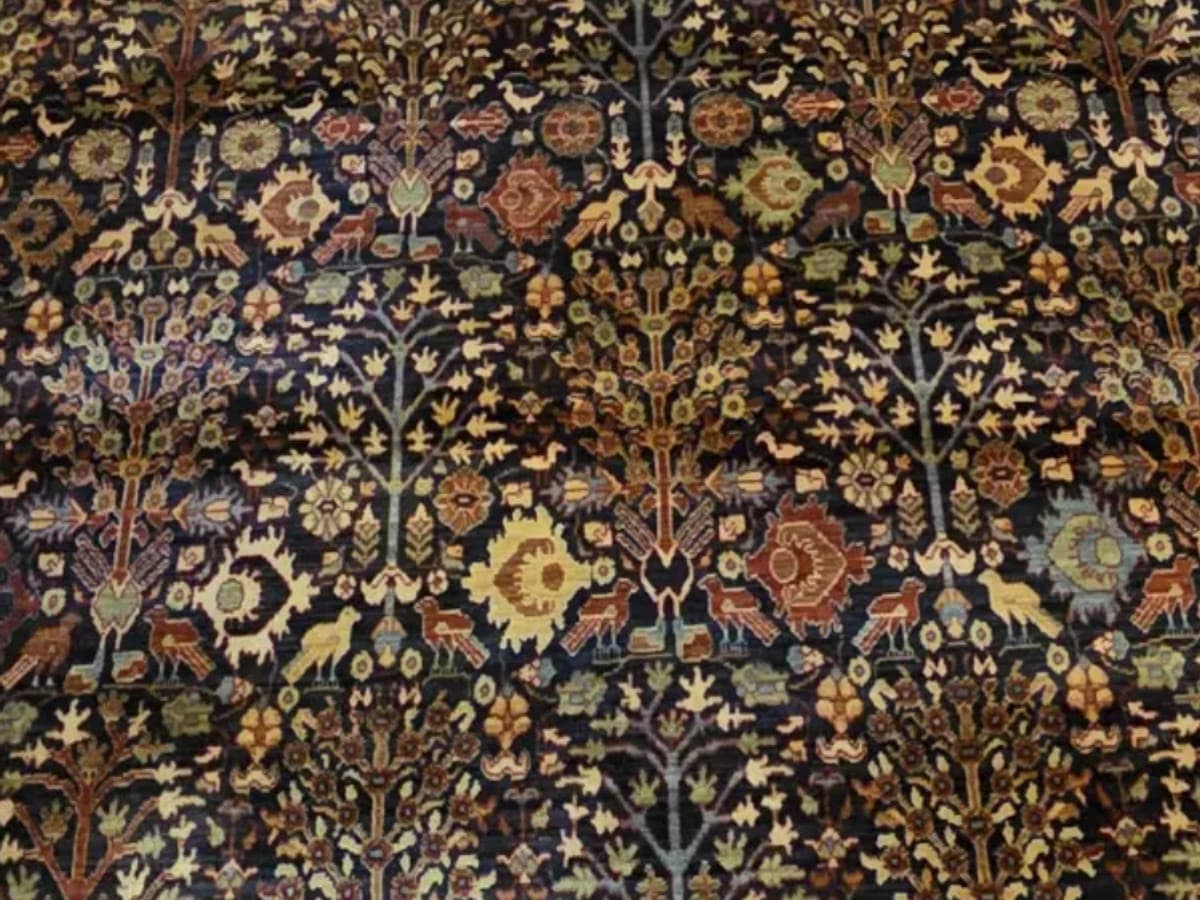
A Persian rug is two textiles in one: wool pile knotted onto a cotton skeleton. Keeping the skeleton dry is the whole job.
The problem with soaking a two-fiber rug
Full immersion washing treats a Persian rug as if it were one material, and it isn't. The bath soaks pile and foundation alike, and the two fibers respond on completely different schedules. Plenty of rugs come back from a wash with edges that won't lie flat or a ripple through the field that was never there before. The plant didn't do anything unusual. Saturation itself is the stress.
The home version is worse only because it adds time. A garden hose in the driveway soaks the rug just as thoroughly as a wash pit, and then the rug spends two or three days drying on concrete. The wool face dries first and looks done. The cotton core underneath stays wet long after, quietly browning, souring, and shrinking out of sight.
Wool pile, cotton bones
Under the wool pile of nearly every Persian rug is a woven grid of cotton: the warp threads running the length, the wefts running the width. Wool and cotton are opposite characters around water. Wool resists absorbing it and gives it up readily. Cotton drinks deep, holds on, and shrinks as it dries.
That mismatch is called differential shrinkage, and it's the signature injury of over-wet Persian rugs. Saturate the rug and the cotton grid contracts on a different schedule than the wool pile attached to it. The rug dries with buckles, ripples, or a curl at the corners, and no amount of flattening truly undoes a foundation that has reset at a new size. The pile can be flawless while the geometry underneath is permanently off.
The slow-drying cotton core causes the second family of problems. Cellulose that stays damp browns, weakens, and feeds mildew, all inside the rug where nothing is visible. A Persian rug that smells faintly sour after a past washing is usually telling you its foundation stayed wet too long.
A conservative clean, on your floor
Our method was practically designed around this rug. The low-moisture carbonated solution works in the wool pile, where the soil actually is, and the moisture budget is small enough that the cotton foundation never approaches saturation. No soaking means no differential shrinkage, no days-long dry, and no sour core. The rug lies flat and stays flat, and it's dry in about an hour.
Before cleaning we identify the fiber, test every dye color for fastness, and go over the rug's condition with you. On older Persians we'll point out what we find: nap worn low where the pattern is showing through, moth grazing, past repairs. We're straight about the boundary line, too. Cleaning brings back the color and contrast buried under soil, and it does not restore worn pile, close moth holes, or rebuild fringe. That's a weaver's work, and we don't do it or bill like we do.
What you can expect from the clean itself: soil off the pile, colors visibly deeper, the handle softer, and the whole thing done in your home in an afternoon, watched the entire time.
We walk through the full low-moisture process on our how rug and upholstery cleaning works page, and every job is backed by our 100% satisfaction guarantee.
Frequently asked questions
Is my rug too valuable to be cleaned at home?
The math usually runs the other way. In-home cleaning means no rolling, trucking, warehouse handling, or hanging, and every one of those is a stress event for an older rug. The fewer hands and miles between your rug and clean, the less can go wrong, and you're present for all of it.
My rug's edges ripple after a wash it got years ago. Will cleaning flatten it?
No, and we won't claim it will. Rippling from a past over-wetting means the cotton foundation shrank and reset, and cleaning doesn't change the rug's geometry. What we can do is clean it without making anything worse, which is exactly what the low-moisture approach is for.
I found moth damage. Can you treat it?
We can clean the rug thoroughly, which removes the soil, eggs, and larvae that sustain an infestation, and regular cleaning is genuinely the best prevention there is. What we can't do is repair the holes. Moth damage is missing wool, rewoven by a restorer, and we'll say plainly if your rug needs one.
Related rug & upholstery problems we solve
Oriental rugs
Hand-knotted density and pH-sensitive dyes, handled with a test-first discipline on your own floor.
RugTypeAntique rugs
Irreplaceable rugs cleaned flat, in place, at minimal moisture, with the honest option of stopping if the rug can't take it.
RugTypeWool rugs
The best rug fiber there is, cleaned cool and pH-neutral, the only two conditions it ever asks for.
Sit back down on clean
Enter your zip code to reach your local Safe-Dry® team. We clean rugs and upholstery in-home across 532 locations in 6 states, with same-day appointments in most areas.