
Cleaning Hand-Knotted Oriental Rugs
Dense knotting holds soil deep, and traditional dyes have opinions about pH. We test every color before any moisture touches the rug.
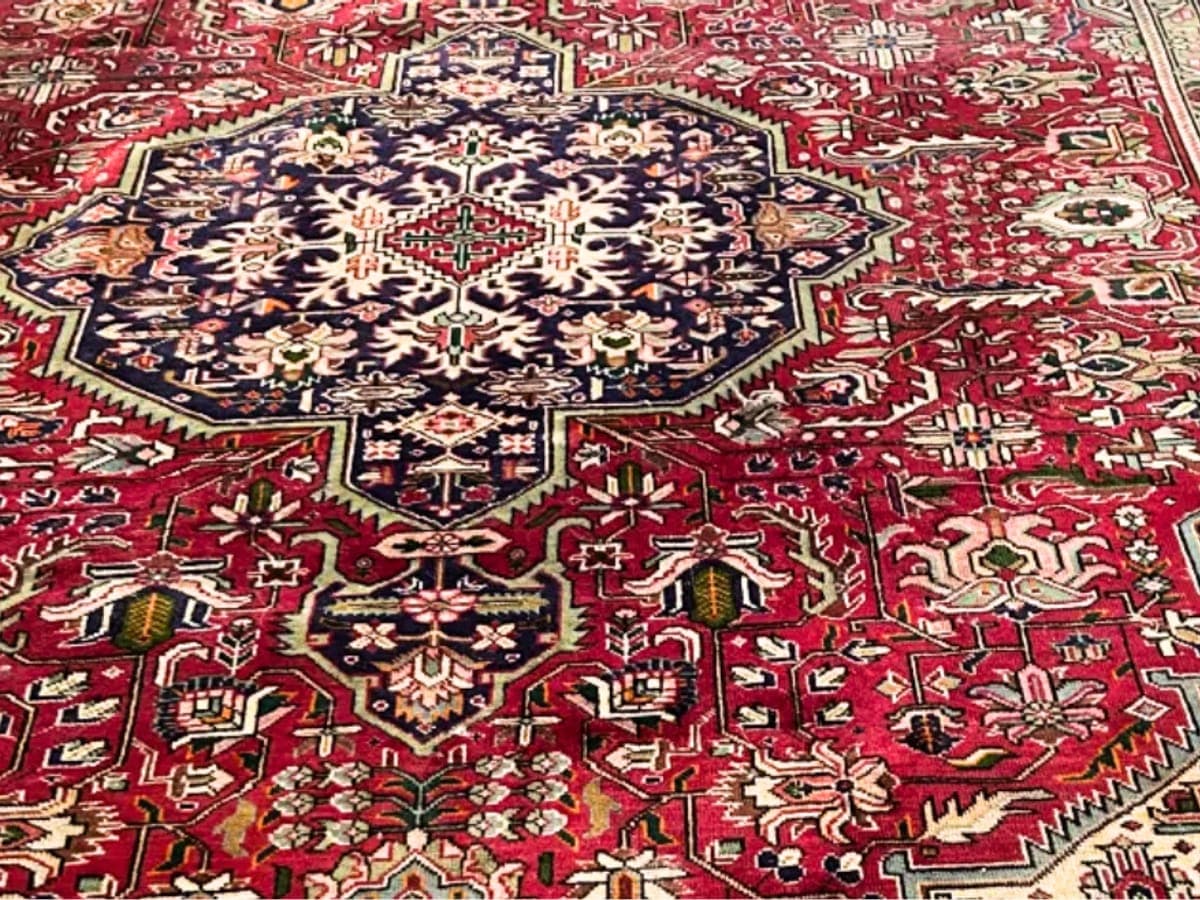
An oriental rug is the one textile in the house where a cleaning mistake can't be shrugged off, because the thing being risked took someone months to knot by hand. The good news is that the risks are specific and well understood. They come down to dye behavior and moisture discipline, and both can be managed in your living room.
Why generic carpet cleaning goes wrong here
The standard carpet-cleaning truck runs hot water and high-pH detergent, because that combination is efficient on synthetic wall-to-wall. Point the same wand at a hand-knotted rug and both halves of the recipe turn hostile: heat and alkalinity are precisely the conditions that make traditional dyes let go. Crews that clean two hundred nylon carpets for every wool rug tend to find this out on your rug.
The DIY version fails on volume instead of chemistry. Hosing an oriental rug in the driveway saturates it end to end, and a fully wet rug is where loose dye gets hours of travel time. Reds walk into ivory fields, blues shadow into borders, and the migration that happens during a slow outdoor dry is permanent.
There's also a quieter failure: the cleaner who skips the dye test because the rug 'looks colorfast.' No rug looks colorfast. Colorfastness is invisible. It's a chemical property you test for, and the test takes minutes against a mistake that lasts the life of the rug.
Colorfastness is invisible. It's a chemical property you test for, and the test takes minutes against a mistake that lasts the life of the rug.
Knot density and vegetable dyes
Knot density is what separates these rugs physically. A hand-knotted rug can pack a hundred or more knots into a square inch, and that density turns the pile into a filter. Fine dry soil works down between the knots and accumulates where vacuums don't reach, and because the grit is sharp, every footstep grinds it against the wool. A dense rug can be carrying years of abrasive soil while showing a clean face.
The dyes are the chemistry half. Traditional vegetable dyes, madder red, indigo, walnut, pomegranate, are part of why old rugs glow the way they do, and their fixation varies knot to knot, color to color, rug to rug. Stability isn't guaranteed by age: a dye that sat quietly for sixty years can still run the first time it meets hot, alkaline detergent. Which dye lots on your rug are loose is unknowable by looking, and completely knowable by testing.
If your rug already shows dye bleed, a pink blush around a red medallion, cleaning will not pull that color back where it came from. Migrated dye is dyed fiber. The same goes for sun fading along the window end. Cleaning restores the color that's hidden under soil, and it's often dramatic, but it cannot restore color that's chemically gone, and we don't re-dye.
Test, then clean, in that order, always
The job starts dry. Thorough vacuuming of both faces pulls out the abrasive soil load before any moisture enters the picture, and on a dense rug this stage does a surprising share of the total work. Then comes the part we won't skip for anyone: fiber identification and a colorfastness test on every color in the rug, checked in an inconspicuous spot.
Only then does the rug get cleaned, with the low-moisture carbonated solution at a pH the dyes tolerate, cool, soap-free, and extracted in the same pass. The rug stays flat on your floor throughout, dries in about an hour, and never sees a truck, a wash pit, or a drying room. For fringe: we clean it gently as part of the rug, but repair and replacement of fringe is restoration work we don't do, and we'll say so up front if yours is worn.
We walk through the full low-moisture process on our how rug and upholstery cleaning works page, and every job is backed by our 100% satisfaction guarantee.
Frequently asked questions
Shouldn't a rug like this go to a specialty wash plant?
For routine cleaning, in-home has a real advantage plants can't match: the rug is never rolled, trucked, hung, or handled beyond the cleaning itself, and you watch every step. If a rug needs full restoration or flood recovery, that's plant-and-restorer territory, and we'll refer you honestly instead of charging you for the wrong service.
How often should an oriental rug be cleaned?
Every 12 to 18 months in most homes, annually with pets, kids, or heavy traffic. The interval isn't about appearance. Dense pile hides sharp grit that cuts wool as it's walked on, so by the time an oriental rug looks dirty, it's been abrading for a while.
My rug is 'oriental style' but machine-made. Does any of this apply?
We clean it either way, and the fiber test sorts out what it actually is. Machine-made rugs in wool follow the wool rules. Ones in polypropylene are far more forgiving. The label matters less than the fiber, which is why identification comes before everything.
There's already a pink halo around the red field. Can cleaning remove it?
No, and we'd be taking your money to pretend otherwise. That halo is dye that migrated in a past over-wetting, and the surrounding fiber is now dyed pink. What cleaning will do is lift the soil dulling the rest of the rug, which often makes the overall piece look far better even though the halo stays.
Related rug & upholstery problems we solve
Persian rugs
Wool pile over a cotton foundation, cleaned without ever wetting the skeleton that holds it together.
RugTypeAntique rugs
Irreplaceable rugs cleaned flat, in place, at minimal moisture, with the honest option of stopping if the rug can't take it.
RugTypeWool rugs
The best rug fiber there is, cleaned cool and pH-neutral, the only two conditions it ever asks for.
Sit back down on clean
Enter your zip code to reach your local Safe-Dry® team. We clean rugs and upholstery in-home across 532 locations in 6 states, with same-day appointments in most areas.