Should You Clean That Couch, or Replace It?
Three tests, ten minutes, no tools beyond a damp towel. They separate a dirty couch from a worn-out one before you spend money in either direction.
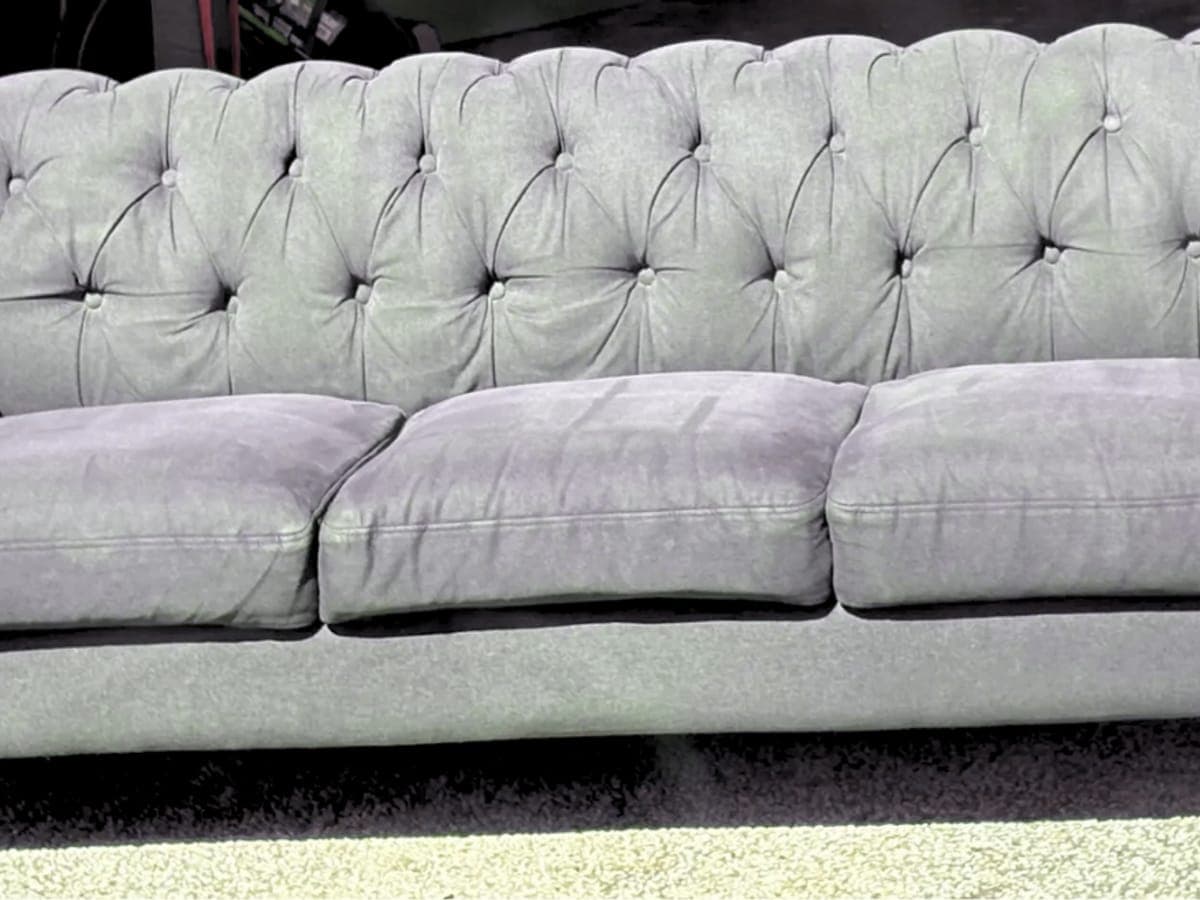
Before the furniture store gets your weekend, run the numbers on what you're replacing. A decent new couch runs four figures. Cleaning the one you own runs a small fraction of that, and a large share of the couches that get hauled to the curb are structurally sound pieces carrying a few hundred dollars' worth of soil. The reverse mistake exists too: paying to clean a couch whose foam is dead buys you a very clean couch that's still uncomfortable. Ten minutes of testing sorts one from the other, and you don't need us present for any of it.
Why good couches get thrown out
Dinge is gradual, and gradual is invisible. A couch doesn't get dirty the way it gets stained, in one memorable event. It drifts, a shade a season, and the people who sit on it daily never see any single step of the decline. Then one day it's viewed with fresh eyes, next to new curtains or through a visiting relative's expression, and it suddenly looks finished. What actually happened is that five years of accumulated soil finally crossed the threshold of attention all at once.
At that moment the couch gets judged on appearance, and appearance can't distinguish a loaded fabric from a worn one. Soil and wear look nearly identical from standing height: both read as flat, dark, and tired. So sound couches get replaced for the crime of being dirty, which is the expensive mistake, and worn-out couches occasionally get cleaned, which is the disappointing one. The couch that looks the worst in the room is not reliably the one in the worst condition.
There's also a quieter force at work: replacing feels decisive and cleaning feels like settling. It's worth naming because it steers real decisions. The tests below take the feeling out of it and replace it with evidence, and the evidence usually favors the cheaper answer.
Soil, dinge, and odor clean out. Collapsed foam and worn-through fabric don't. Ten minutes of testing tells you which couch you own.
The three tests
The press test checks the structure. Push your fist deep into the main seat cushion and pull it out. A cushion with living foam pushes back while you're pressing and refills its shape within a few seconds of release. A cushion that accepts your fist with little resistance, holds the dent, or lets you feel the deck boards through the bottom has collapsed foam. Foam collapse is mechanical: the cell walls have fatigued and broken, and no cleaning process on earth re-inflates them. While you're there, sit in your usual spot and check where your hips land. Sinking to the frame means the same verdict.
The towel test measures what's actually on the fabric. Dampen a white towel with plain water, wring it well, and rub a hidden but used area, the side of a seat cushion or the fabric below a cushion edge, ten firm strokes. Look at the towel. Grey or brown transfer means the darkness on your couch is soil sitting in the fabric, and soil is exactly what cleaning removes. A towel that comes up nearly clean off a couch that still looks dark is telling you the color change is in the fabric itself: wear, sun fading, or dye breakdown, none of which cleaning reverses.
The smell test locates odor and dates it. Press your nose directly to the fabric of the seat cushion, then the back cushion, then an arm. A sour, musty, or generally organic note at the fabric is trapped body oil, biology, and time, and it lives in the material where cleaning can reach it. Odor is the most fixable symptom on the whole list, so a couch failing only the smell test is a strong cleaning candidate. The exception that changes the answer: a sharp ammonia note means urine has likely reached the cushion interior, which is a harder problem than a cleaning and worth an honest conversation before anyone books anything.
Reading the results, and what we'll tell you
Score it simply. Firm foam plus a dirty towel plus fabric-level odor is a dirty couch, and dirty is our department: the soil transfers to the towel because it will transfer to our extraction, and the odor source comes out with an enzyme treatment behind it. This is the common outcome, it costs a fraction of replacement, and the couch you get back is the couch you originally chose, which is presumably the one you wanted.
Collapsed foam or a clean towel over bad-looking fabric points the other way. We don't replace foam or re-upholster, that's a different trade, and cleaning a structurally failed couch would waste your money on a piece that will feel exactly as tired afterward. Worn-through fabric, deep sun fading, and old dye transfer sit in the same category: those changes are in the material, and honesty about them is worth more than a booking. If your couch fails the structure test, replacement or an upholsterer is the right spend and we'll say so.
Mixed results are common and worth a walkthrough. One dead seat cushion on an otherwise sound and salvageable couch, or great structure with one permanent stain, are judgment calls with real options, including cleaning around a known flaw with expectations set. The technician will look, tell you which side of the line the piece is on, and quote a firm price only if cleaning is genuinely the right answer. There's $25 off through the site, and it applies only to jobs we believe in.
We walk through the full low-moisture process on our how rug and upholstery cleaning works page, and every job is backed by our 100% satisfaction guarantee.
Frequently asked questions
How does the cost of cleaning compare to replacing?
Cleaning runs a small fraction of any replacement worth having, which is why the decision deserves ten minutes of testing before either purchase. Your technician gives a firm price at the walkthrough after seeing the piece, with $25 off through the site. If the tests point to replacement, we'd tell you that for free instead of quoting anything.
Can you replace the foam if my cushions have collapsed?
No. Foam replacement and re-upholstery are an upholsterer's trade and we don't offer them. What we can do is tell you honestly when collapsed foam means cleaning is the wrong spend, and when a piece is worth cleaning around one tired cushion. An upholsterer can re-core good cushion covers, and that plus a cleaning can be a legitimate middle path on a quality frame.
Will cleaning make my old couch look new again?
It makes it look like itself, which on a soil-loaded couch is a startling change: seat fronts lighten, the grey lifts, the original color comes back out of hiding. What it can't do is reverse changes to the fabric itself, so worn pile, sun-faded panels, and old dye damage will still be what they are, just clean. The towel test above predicts which kind of change your couch is carrying.
The fabric on my seat cushions looks shiny and thin. Which side of the line is that?
Shiny-thin is usually wear: fiber that has been abraded down over years of use, which no cleaning restores. Compare the shiny zone to a hidden area with the towel test. If little soil transfers and the sheen remains, the fabric is worn and this couch is closer to the replace column, at least for the seat panels. We'll confirm at a walkthrough instead of guessing from a description.
Related rug & upholstery problems we solve
Couches & sofas
The head service. Sofas cleaned in your living room, one cushion at a time, dry the same afternoon.
UpholsteryCareStain removal
Tannins, oils, proteins, and dyes each release differently. Matched chemistry, controlled moisture, honest odds.
UpholsteryCarePet hair & odor
Hair fastened into the weave, dander driving the allergies, rancid coat oils behind the smell. All three, out.
Sit back down on clean
Enter your zip code to reach your local Safe-Dry® team. We clean rugs and upholstery in-home across 532 locations in 6 states, with same-day appointments in most areas.