Leather Furniture Cleaning and Conditioning
Leather doesn't shed the oils you leave on it. It accumulates them, then dries and stiffens where it flexes. Cleaning handles the first problem, conditioning the second.
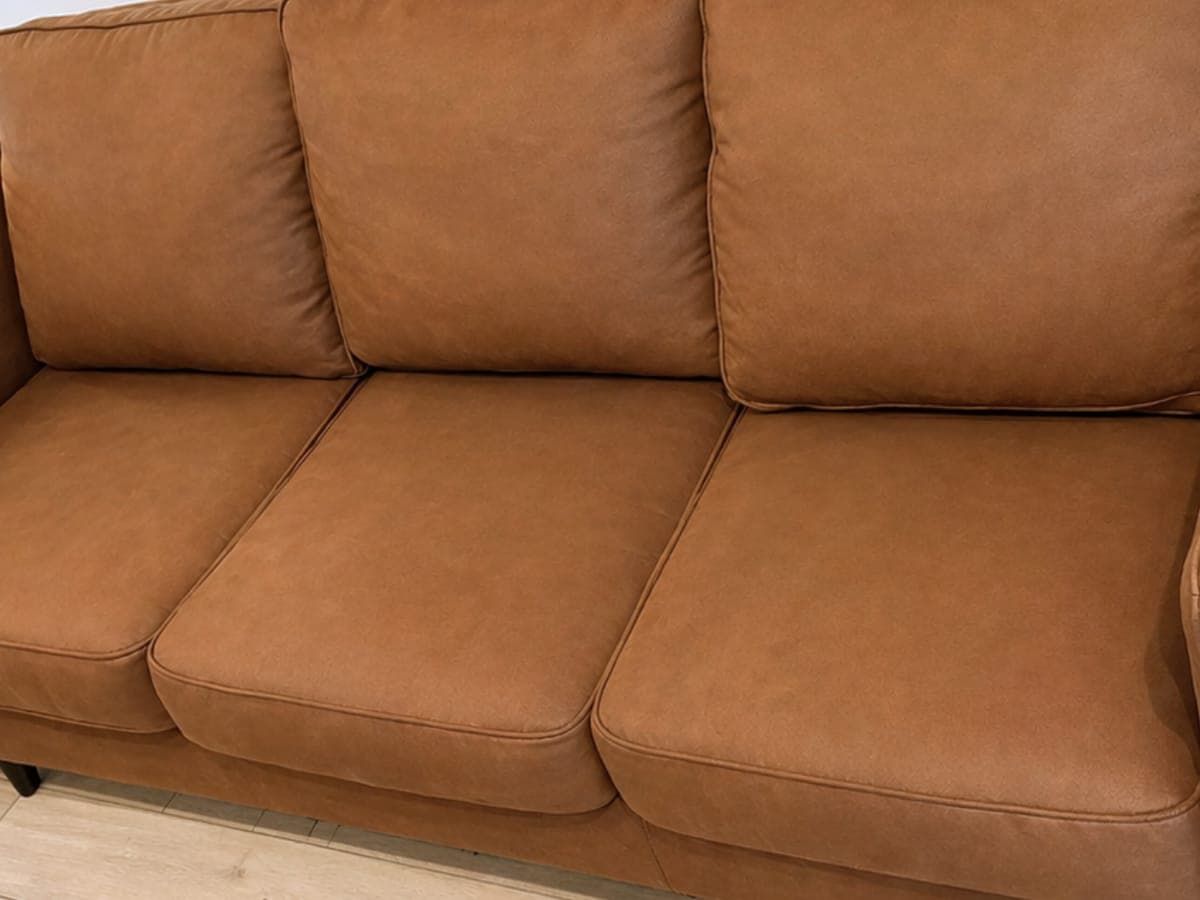
Yes, we clean leather. It's one of the most common questions we get, usually from someone who has been told by other companies that leather is off the menu. Leather furniture takes a gentle cleaning to lift the accumulated surface oils, followed by conditioning to keep the hide supple. What it doesn't take is fabric chemistry, folk remedies, or anything from the kitchen cabinet.
Saddle soap, wipes, and pantry oils
Saddle soap is the myth with the longest pedigree. It sounds like the leather product, but it was formulated for tack: working saddlery that gets oiled constantly and lives outdoors. It's strongly alkaline, and on furniture leather it strips the protective topcoat and the finish's plasticizers along with the dirt. A sofa scrubbed with saddle soap often looks great for a month and then starts developing dry, matte patches exactly where the scrubbing was most thorough.
Household and baby wipes are the modern version of the same mistake. Most carry alcohol or cleaning agents that dissolve the very oils the finish depends on, one gentle-feeling swipe at a time. Wipe the armrests weekly for a year and you've dry-cleaned that patch of hide a few hundred times. The cracking that follows looks like age. It's actually maintenance.
Then there's the pantry-conditioning school: olive oil, coconut oil, and their cousins, rubbed in to restore shine. Food oils are the wrong molecule entirely. They sit on and in the finish, oxidize, go rancid, and darken, leaving a tacky, slightly sour-smelling surface that now attracts dust. Worse, they're nearly impossible to fully remove afterward, which turns a maintenance shortcut into a permanent condition.
Leather banks every oil deposit you leave on it, and the interest comes due as a darkened, tacky headrest and a topcoat gone soft.
A finished hide is a living material under a thin shield
Most furniture leather is finished leather: the hide itself, a layer of pigment for uniform color, and a thin clear polyurethane topcoat over everything. That topcoat is the only thing your skin ever touches, and it's microns thick. It has microscopic pores, it flexes with the hide, and its job is to take the abuse so the pigment and hide underneath don't. Every question about cleaning leather is really a question about respecting that topcoat.
The daily loading is oil transfer. Skin and hair oils land on the topcoat with every contact and slowly migrate into its surface, taking whatever dust they've captured along. Leather has no pile to hide any of this in, so the accumulation shows as a gradual darkening and a dulling sheen at the contact zones: headrest, armrests, seat centers. Left for years, that oil load starts chemically softening the topcoat itself, which is why a neglected headrest eventually feels tacky. The hide is fine. Its shield is dissolving.
The opposite problem runs underneath at the same time. A hide is kept flexible by fat liquors put into it at the tannery, and those deplete: dry indoor air, sunlight, heat from vents and radiators all pull them out. Depleted leather stiffens, and stiff leather being flexed is how crack lines form, always at the folds and seat creases where movement concentrates. Cracking isn't caused by dirt, so cleaning alone never prevents it. That's the whole case for conditioning.
Clean the topcoat, feed the hide
The cleaning pass is deliberately gentle: pH-appropriate chemistry that lifts the migrated body oils and captured soil off and out of the topcoat without cutting into the finish itself. No saturation, no scrubbing, no alkaline shortcuts. The contact zones get the most attention because that's where the oil banked, and the change in both color and feel at a headrest is usually the moment clients become believers.
Conditioning follows, and it isn't a shine coat. A proper conditioner replaces the depleted fat liquors so the hide stays supple where it flexes, which is the actual defense against drying and cracking. The finished surface is clean, soft-handed, and matte in the way good leather should be, and it's ready to use as soon as we're done.
What we don't do, said plainly: re-pigmentation, dye work, and finish repair are a restorer's trade, not a cleaner's. Color worn through to the hide, cat scratches, existing cracks, and deep sun fading will still be there after the best cleaning on earth. What you'll get from us is an honest read at the walkthrough on what's soil, what's wear, and which one your sofa is dealing with. Faux leather, by the way, gets serviced too, with chemistry matched to its polyurethane face.
We walk through the full low-moisture process on our how rug and upholstery cleaning works page, and every job is backed by our 100% satisfaction guarantee.
Frequently asked questions
Can you fix the color worn off my seat cushion?
No, and we'd tell you that at the walkthrough before you spent anything. Worn-through color means the pigment layer itself is gone, and replacing pigment is re-pigmentation, a restorer's service we don't offer. What cleaning does handle is the darkening and stickiness from accumulated oils, which is often a bigger share of what people are unhappy about than they realize.
What does conditioning actually do?
It replenishes the fats that keep the hide flexible, the ones that indoor air, sun, and heat slowly pull out. Flexible leather bends without damage. Depleted leather stiffens and eventually cracks at the flex points. Conditioning is prevention, and it only works on cracks that haven't happened yet, which is the argument for not waiting.
Is faux leather cleanable, or only the real thing?
Both. Faux leather wears a polyurethane face similar in spirit to the topcoat on finished leather, and we service it with chemistry suited to it. It skips the conditioning need but shares the oil-accumulation problem, especially on armrests.
How often should leather furniture be cleaned and conditioned?
Every 12 to 18 months keeps the oil load off the topcoat and the hide fed, with annual service making sense for a daily-driver piece or a dry climate. Pricing is a firm quote at the walkthrough after the technician sees the piece, and there's $25 off through the site.
Related rug & upholstery problems we solve
Recliners & armchairs
Somebody's favorite chair, with the headrest and armrest oil to prove it. Cleaned in place, mechanism kept dry.
UpholsteryPieceCouches & sofas
The head service. Sofas cleaned in your living room, one cushion at a time, dry the same afternoon.
CommercialCommercial
Task chairs, booths, lobbies, and pews cleaned in place after hours, dry before the doors open.
Sit back down on clean
Enter your zip code to reach your local Safe-Dry® team. We clean rugs and upholstery in-home across 532 locations in 6 states, with same-day appointments in most areas.