Velvet, Linen, and Delicate Fabric Cleaning
Fabrics where the first mistake is the one that lasts. Every delicate piece starts with a hidden-area test, and the pile gets groomed while it dries, never after.
Steam, irons, and other pile killers
Garment steamers and steam mops are the tools people reach for on velvet, on the theory that steam is gentle. On pile fabric it's the opposite. Heat and moisture together relax the fibers, and whatever position the pile is lying in at that moment becomes its new memory. Steam a crushed patch without grooming it upright and you've set the crush. Steam a clean patch carelessly and you've created one. Ironing is the same mistake with more commitment: most modern velvet is synthetic, and an iron hot enough to matter is hot enough to melt the pile tips into a permanent sheen.
On linen and the other flat delicates, the failure mode is water itself. A damp cloth dabbed on a spot leaves a browned, hard-edged mark as the moisture wicks outward through the weave and dries, sometimes more visible than the spill it was chasing. So the owner dabs at the water mark, which makes a second mark. Delicate fabrics are the one category where a cautious little cleaning attempt routinely becomes the most visible thing on the piece.
Pile direction is the whole game
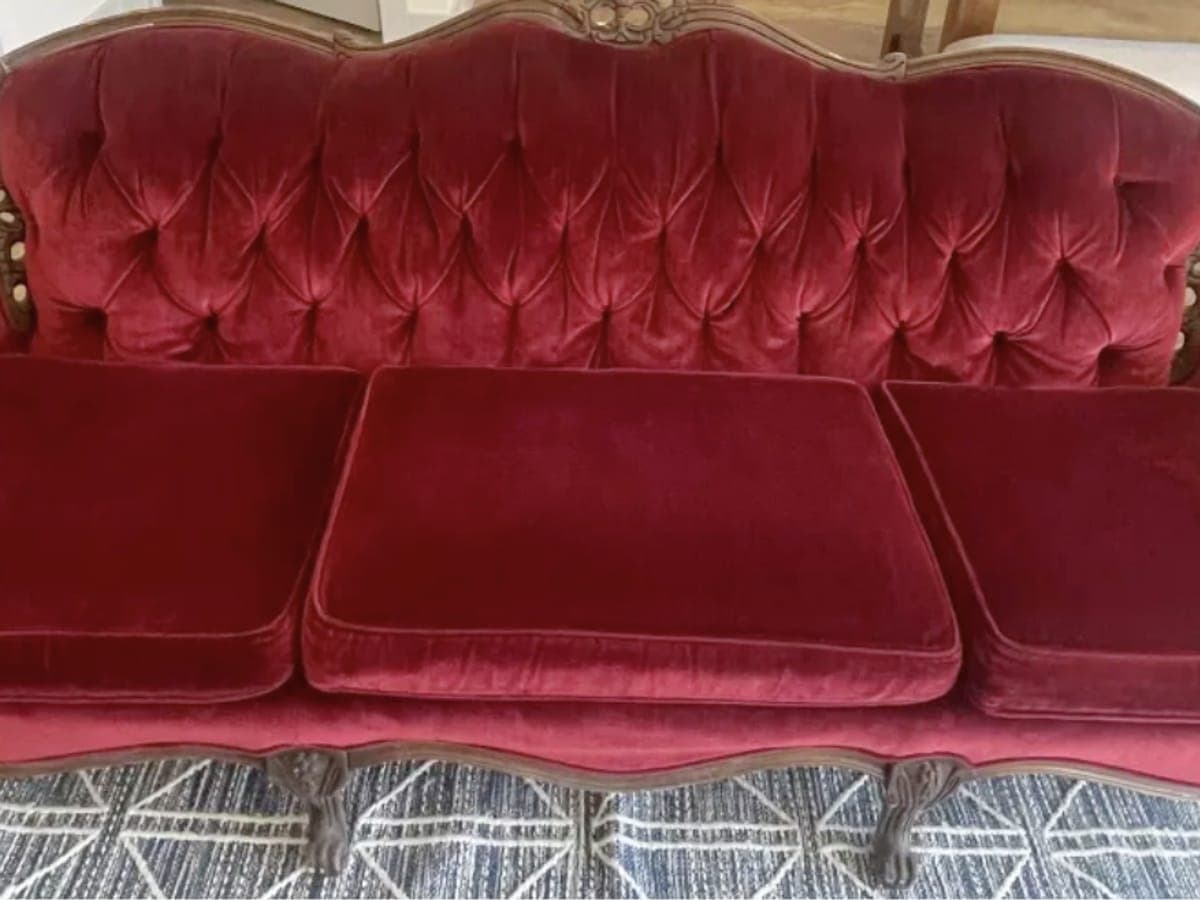
Velvet is architecture: thousands of upright fiber tufts per inch, all catching light from whichever way they lean. Lean them one direction and the panel reads pale and lustrous. Lean them the other way and the same panel reads dark. That's why a hand dragged across a velvet cushion draws a visible stripe, and why most of what owners call stains on velvet are really regions of pile pointing the wrong way. Crush marks from a sat-on cushion, a heavy box, a sleeping dog, are bent pile, not soil. Bent recovers with the right handling. Broken doesn't, and knowing the difference before promising anything is the job.
Moisture interacts with that architecture in a specific way. Wet pile collapses, and pile that dries collapsed sets in the collapsed position, which is how a water spill turns into what looks like permanent damage on a fabric that isn't even stained. The rescue window is during drying: pile groomed upright while damp dries upright. Groomed after it has dried, it mostly ignores you.
Performance fabrics sit at the other end of the delicacy scale but end up on this page for the same reason: they punish the wrong chemistry. Sunbrella is solution-dyed acrylic, Crypton is an engineered barrier fabric, and both carry protective properties that harsh cleaners and high-alkaline chemistry can degrade. The fabrics survive the bad cleaning. The protection doesn't, and the owner finds out at the next spill.
Test first, then moisture discipline
Every piece on this page starts the same way: a test in a hidden area, an inside back panel or under-skirt spot, checking colorfastness and how the fiber behaves before any visible surface is touched. Velvet and delicates are exactly where that discipline pays for itself, and it's why we can work on pieces other cleaners decline.
From there the low-moisture carbonated process does what it does everywhere, lifting soil to the surface for extraction, but with the application dialed down to what the specific fiber tolerates and one added ritual for pile fabrics: grooming during the dry. The pile gets brushed upright while damp so it dries standing and uniform, crush marks get worked in that same window, and performance fabrics get cleaned with their protective treatments left intact. Dry time stays inside one to two hours. Two limits: sun-faded velvet is faded for good, and pile that has genuinely broken off under years of hard wear has no way back. We'll walk the piece with you and say which is which before we begin.
We walk through the full low-moisture process on our how rug and upholstery cleaning works page, and every job is backed by our 100% satisfaction guarantee.
Frequently asked questions
Can crushed velvet be brought back?
If the pile is bent, yes, and most crush marks are bent pile. Cleaning plus grooming while the fabric dries restands it. If the pile has actually broken off from years of hard contact, the patch is permanent, because no process regrows fiber. A close look during the walkthrough usually tells us which one you have, and we'll say so plainly.
Do you clean Sunbrella, Crypton, and other performance fabrics?
Yes, and with their protection preserved. These fabrics are engineered with stain and moisture resistance built in, and the wrong chemistry strips it even when the fabric looks fine afterward. Our process cleans them with the protective properties intact, which is the entire point of owning them.
Will professional cleaning leave water marks on my linen sofa?
No, and the reason is the same moisture discipline that runs through everything we do. Water marks on linen come from moisture wicking outward and drying at an uncontrolled edge. Our solution goes on in a metered film over the full panel and leaves in the extraction pass, so there's no wandering wet edge to dry into a ring.
How do I know if my fabric counts as delicate?
Any pile fabric, anything labeled dry-clean or S-code, silk blends, loose-woven linens, and anything vintage or inherited. When in doubt, treat it as delicate and let the hidden-area test make the call. The test is exactly how we answer that question ourselves.
Related rug & upholstery problems we solve
Leather
Gentle cleaning plus conditioning that lifts the banked oils and keeps the hide from drying and cracking.
RugTypeSilk rugs
A fiber whose shine is pure optics, cleaned with the least moisture and the lightest touch we use on anything.
UpholsteryCareStain removal
Tannins, oils, proteins, and dyes each release differently. Matched chemistry, controlled moisture, honest odds.
Sit back down on clean
Enter your zip code to reach your local Safe-Dry® team. We clean rugs and upholstery in-home across 532 locations in 6 states, with same-day appointments in most areas.